
Beat the Bloat: Simple, Fast Fixes





That tight, uncomfortable “full” feeling is incredibly common. It is usually caused by excess gas, swallowed air, sluggish digestion, or certain foods.
The good news? A few small tweaks can bring fast relief.
1. Pace Your Plate
- Slow down: Rushing through meals causes you to swallow air and sends unchewed food into your stomach. This heavy digestive load compromises your stomach's ability to do its job, resulting in slow digestion and bloating.
- Ditch the extras: Skip chewing gum and drinking through straws if bloating is a frequent issue.
Quick Takeaway: Eating slower gives your digestive system a better chance to keep up.
2. Step It Out
- Move post-meal: A light 10-minute walk after lunch or dinner can help stimulate the gut and ease that heavy, stretched feeling.
- Stay consistent: Regular movement is recommended to help keep your digestive system functioning smoothly.
3. Skip the Bubbles
- Deflate the fizz: Sparkling water and sodas can pump extra gas straight into your digestive tract.
- Smart swaps: Trade carbonated drinks for still water or soothing herbal teas.
Pro Tip: If bloating is a regular issue, try going fizz-free for a week and see whether your symptoms improve.
4. Track Your Bloat Triggers
- Know the culprits: Beans, onions, dairy, sweeteners, and highly processed foods are common offenders.
- Journal it: Keep a simple food-and-symptom diary for a week to spot patterns before cutting foods out entirely.
5. Keep Things Moving
- Hydrate: Sluggish bowel movements can worsen bloating. Drink plenty of water to help keep digestion regular.
- Go slow with fibre: Gradually introduce soluble fibre like oats or linseed. Adding it too fast can actually increase gas.
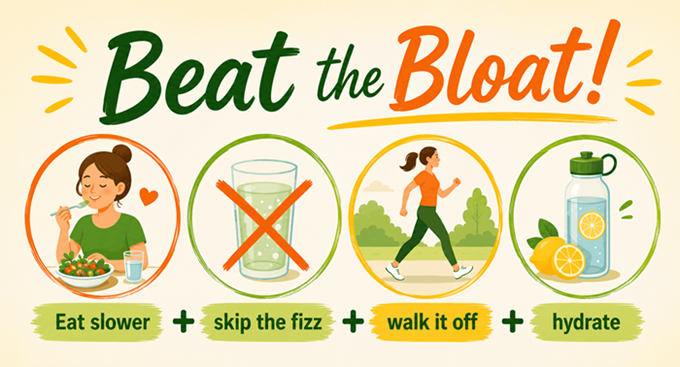
The Quick Takeaway: Reset your gut in four steps:
Eat slower, skip the fizz, walk it off, and hydrate.
When to See a Professional: Occasional bloating is normal. However, consult a healthcare professional if it is frequent, persistent, or accompanied by:
- Unexplained weight loss
- Blood in your stool
- Ongoing abdominal pain or fever
- Vomiting or diarrhoea
- A sudden or severe change in bowel habits
- A lump or swelling in your tummy
References & Further Reading
- National Institute of Diabetes and Digestive and Kidney Diseases. Symptoms & Causes of Gas in the Digestive Tract. niddk.nih.gov
- National Institute of Diabetes and Digestive and Kidney Diseases. Eating, Diet, & Nutrition for Gas in the Digestive Tract. niddk.nih.gov
- Mayo Clinic. Belching, gas and bloating: Tips for reducing them. mayoclinic.org
- NHS. Bloating. nhs.uk
- NICE. Abdominal pain - acute: Red flags. nice.org.uk
×
![Image Modal]()
This content will be overwritten when the modal opens
This form is protected by reCAPTCHA - the Google Privacy Policy and Terms of Service apply.