
Energy Without Caffeine: What Actually Works?




Love the lift from caffeine, but not the jitters, racing thoughts, or afternoon crash? You are not alone. More people are looking for cleaner, calmer ways to support their energy — without relying on another coffee or energy drink.
The good news? Energy is not just about stimulation. Your body naturally creates energy every day. The key is supporting the systems that help you handle stress, turn food into fuel, stay hydrated, and recover properly.
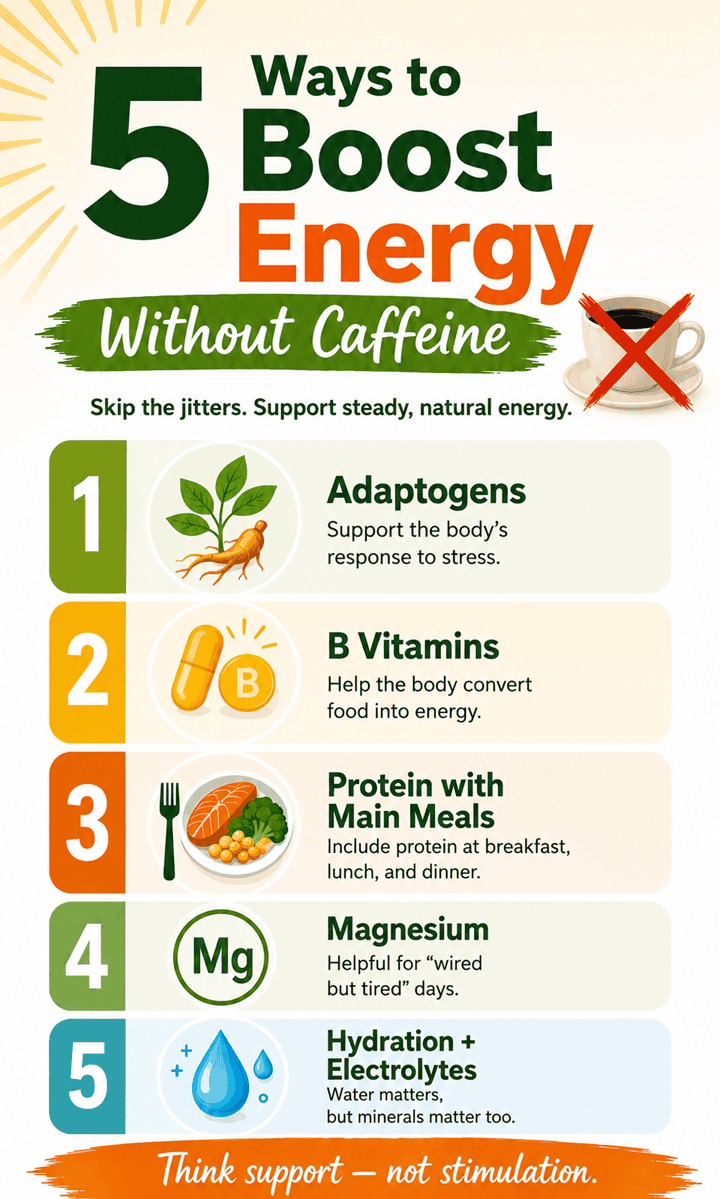
5 Natural Ways to Boost Energy Without Caffeine:
1. Support Stress Resilience with Adaptogens
Ever feel completely drained, even though you have barely been physically active? Stress can keep your body stuck in “go mode” all day, leaving you feeling exhausted.
- Adaptogens are herbs that help support the body's response to stress.
- Adaptogens may be particularly helpful if your low energy feels linked to stress, tension, or burnout.
- Consider: Ashwagandha, Rhodiola, or Ginseng.
Quick Takeaway: Less stress on the body can often mean more energy available for daily life.
2. Fuel Up with B Vitamins
- B vitamins help support the natural processes your body uses to convert food into energy.
- B vitamins support normal energy metabolism rather than acting as stimulants.
- They are especially important during busy or demanding periods.
- Food sources: meat, fish, poultry, eggs, dairy, leafy greens, beans, and legumes.
- Consider: a B-complex supplement.
3. Protein, Protein, Protein!
Protein plays an important role in helping you feel satisfied and energised throughout the day.
- Include a quality protein source with each main meal.
- Great options: fish, chicken, lean meats, eggs, beans, lentils, chickpeas, tofu, and tempeh.
- Snacks for reducing energy dips: greek yoghurt, nuts, boiled eggs, a smoothie with protein, or hummus and crackers.
Pro Tip: Build your plate around protein first, then add colourful vegetables, healthy fats, and fibre-rich carbohydrates.
4. Replenish Magnesium
Think of magnesium as your body's ultimate multitasker, quietly supporting hundreds of essential functions every single day.
- Supports normal muscle and nervous system function.
- Plays a role in energy production.
- May be worth considering if you often feel physically tired but mentally switched on.
- Magnesium-rich foods: nuts, seeds, legumes, whole grains, and leafy greens.
5. Do Not Forget Hydration and Electrolytes
Sometimes low energy is not a caffeine problem, it's a hydration problem.
- Electrolytes such as sodium and potassium help support fluid balance.
- Electrolytes play important roles in nerve and muscle function.
- Electrolytes can be really helpful after exercise, sweating, travel, or hot weather.
- Water matters, but minerals matter too!
Did You Know? The “caffeine crash” often happens because caffeine provides a temporary lift, but it doesn't replace sleep, nutrients, hydration, or balanced meals. For more consistent energy, think support — not stimulation.
Final Thoughts: Steady energy starts with supporting the basics: stress resilience, good nutrition, hydration, and recovery.
Ready to skip the jitters? Support steady daily energy, calm resilience, and vitality — naturally caffeine-free.
References & Further Reading
- National Institutes of Health Office of Dietary Supplements. Magnesium Fact Sheet for Health Professionals. ods.od.nih.gov
- MedlinePlus. B Vitamins. medlineplus.gov
- Centers for Disease Control and Prevention (CDC). Sodium and Potassium Health. cdc.gov
- National Center for Complementary and Integrative Health (NCCIH). Ashwagandha. nccih.nih.gov
- National Center for Complementary and Integrative Health (NCCIH). Asian Ginseng. nccih.nih.gov
- Panossian, A., & Wikman, G. (2010). Effects of Adaptogens on the Central Nervous System and the Molecular Mechanisms Associated with Their Stress-Protective Activity. Pharmaceuticals, 3(1), 188–224. ncbi.nlm.nih.gov
This content will be overwritten when the modal opens
This form is protected by reCAPTCHA - the Google Privacy Policy and Terms of Service apply.