





We’ve all been there: You wait weeks for an appointment, sit in the waiting room for an hour, and then you have exactly 15 minutes to explain everything to your GP. It’s rushed, stressful, and easy to forget the important stuff.
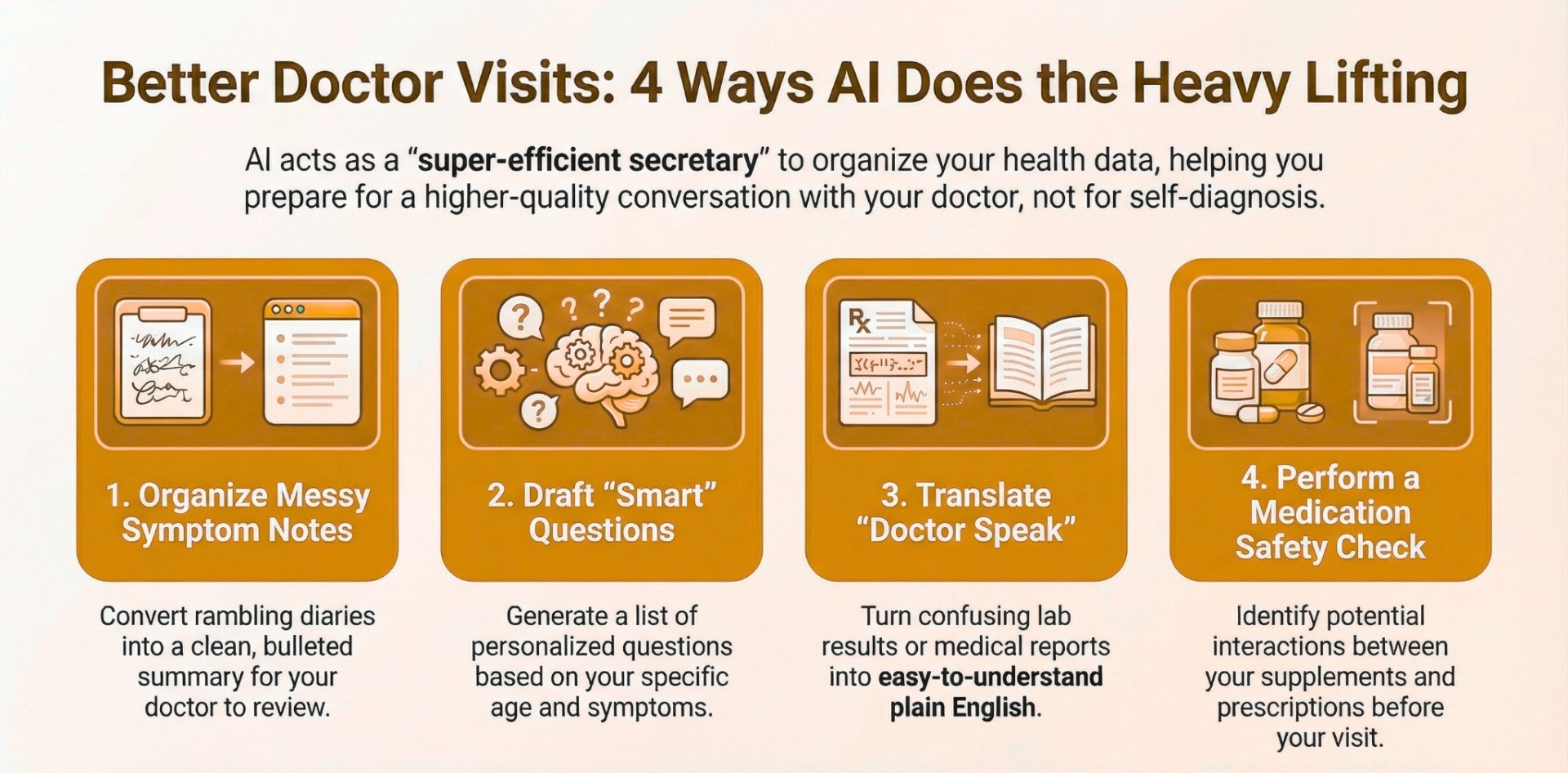
You don't need AI to diagnose you (we don’t encourage that), but you should use it to prepare. Think of it as a super-efficient secretary organising your paperwork before the boss walks in.
Below are four practical ways to use AI tools (like ChatGPT, Claude, or Gemini). Use these to get the most out of your next visit and advocate for your health.
1. Turn Your Rambling Notes into a Summary
Doctors love data, but they hate reading tonnes of text. If you’ve been keeping a symptom diary on your phone, it’s likely to be messy.
Paste your raw notes into an AI tool and ask it to clean them up. This gives your doctor a snapshot of your health without them having to dig for it.
Try this prompt:
"I’m going to paste my symptom notes from the last two weeks. Please organise them into a bulleted list, grouped by symptom type and frequency, so I can show it to my doctor."
2. Draft "Smart Questions"
It’s easy to go blank when the doctor asks, "Do you have any questions?" Later, you’ll remember five things you wish you'd asked.
Give the AI some basic context (e.g., "65-year-old female, chronic fatigue") and ask it what you should be asking. This helps you go in feeling empowered and prepared, not put on the spot.
Try this prompt:
"I am a [Age] year old [Gender] seeing my doctor about [Issue]. What are 5 specific questions I should ask to make sure I understand my treatment options and follow-up plan?"

3. Translate "Doctor Speak" to Plain English
Lab results are often full of confusing data. If you have old reports or digital access to new ones, AI is excellent at translation.
Important Privacy Note: Before pasting a medical report, redact your name, address, and patient ID.
Try this prompt:
"I’m pasting a section of my blood test results. Please explain what these results mean in plain English and highlight which ones are outside the standard range, so I can ask my doctor about them."
4. The Supplement & Lifestyle Safety Check
Many people forget to tell their GP about the nutritional and herbal supplements, or prescribed medications they take. However, natural supplements can sometimes interact with prescription medications.
Use AI to flag potential issues before you go, so you can bring them up specifically with your GP.
Try this prompt:
"I am currently taking [Medication Name]. I also take [Supplement A] and [Supplement B]. Are there any known interactions or side effects I should ask my doctor about?"
⚠️The Golden Rule
AI is a researcher, not a doctor.
Never use these tools to self-diagnose or decide to stop taking medication. The goal here is preparation. You use the AI to gather the facts so you can have a higher-quality conversation with the human expert in the room.
This form is protected by reCAPTCHA - the Google Privacy Policy and Terms of Service apply.