We’ll keep it simple and straightforward for you. It’s full fat plain yoghurt. That’s the yoghurt you should be consuming. It has no sugar, artificial flavours, artificial colours or sweeteners added. It also gives you the freedom to add whatever you want to it without feeling guilty. You can add honey, maple syrup, cinnamon or frozen berries if you like. You can choose!
Below are some important points regarding full fat plain yoghurt:
Take a closer look at those friendly microorganisms. Make sure that the label on your yoghurt says LIVE cultures. Almost all of the benefits of yoghurt come from these microorganisms that should be alive when you purchase them. Some processing like heat treatment can kill live cultures decreasing the health benefits of the yoghurt. Heat treatments are used to prolong the yoghurt’s shelf life. But for the full health benefits, you really need live instead of dead cultures. The two most essential strains of bacteria are Lactobacillus bulgaricus and Streptococcus thermophilus, but in our infograhic below you’ll see many others that can also be present in your yoghurt.
Protein. A cup of yoghurt provides approximately 10 grams of quality protein. In fact a cup of live cultured yoghurt contains 20% more protein than a cup of milk. More good news is that the protein in yoghurt comes pre-digested compared to the protein in milk. Thanks again to the live friendly microorganisms present in your yoghurt who predigest (break down bonds for easier digestion) these proteins for you. Protein from yoghurt also has a higher content of the amino acids glycine and proline than milk. Proline and glycine both help to improve calcium absorption and are important for healthy cartilage, connective tissue and skin.
More vitamins and minerals. Yoghurt is naturally abundant in the minerals calcium, phosphorus and potassium. Like its cousin milk, yoghurt is a good source of calcium. Calcium is essential for the growth and maintenance of healthy bones. The acidity of yoghurt may increase the absorption of some minerals such as calcium, magnesium and phosphorus. It may also reduces the inhibitory effect imposed by compounds like phytic acid which is notorious for blocking the absorption of minerals. Other minerals found in yoghurt include iodine, zinc and molybdenum.
As for vitamins, yoghurt has a variable amount depending on the type of yoghurt. Full fat plain yoghurt has an abundance of fat soluble vitamins and all the B vitamins, particularly vitamin B2 (riboflavin) and vitamin B1 (thiamine). You need riboflavin to release energy from the foods you eat, while thiamine is needed for optimal carbohydrate metabolism as well as healthy heart and nerve function. Both vitamins are important for energy production by the body. Keep in mind that some strains of Streptococcus thermophilus use up the vitamins B6 and B12 in the yoghurt themselves.
You’ll also be surprised to know that Streptococcus thermophilus and the genus Bifidobacteria can actually synthesise certain water soluble vitamins like folic acid inside your gut.
Carbohydrate. Lactose is the sugar found in dairy products including your yoghurt. Live friendly bacteria ferment (basically digest) up to 30% of the lactose into its individual sugars, namely galactose and glucose. In essence, if you’re lactose intolerant, you may find yoghurt easier to tolerate than milk. You can thank the live friendly microorganisms for this. Just remember to choose yoghurt with no added sugars.
Fat. Perhaps the greatest controversy when it comes to choosing yoghurt is the fat content. You need fat particularly saturated fat for a variety of important functions. We have a separate article on this.Click hereif you would like to read more about this. Complexity aside, full fat plain yoghurt can contain as high as 10% fat. Again, yoghurt comes out the victor when compared to milk because the fermentation process breaks down some of the fats into fatty acids which enhances their digestion and absorption. CLA or conjugated linoleic acid is also higher in yoghurt. CLA helps to support the immune system and may help to protect against cancer.
The best way to appreciate the full health benefits of full fat plain yoghurt is by making your own. Here are the steps for making your own:
1. Heat milk to 40-45°C.
2. Place in a yoghurt maker or sterilised glass jar.
3. Add cultures and stir in the milk. If you’re from New Zealand, you can buy cultures (the friendly bacteria) in packets that you add to milk.
4. Leave yoghurt maker on the kitchen bench for 8-12 hours or if you’re using a glass jar, place it in a warm location such as your hot water cupboard for 8-12 hours.
5. Add your favourite fresh fruit or other flavours and spices. Enjoy! You just made your first yoghurt!
You can also spice up your masterpiece by adding fresh frozen berries. This can make a great snack at work. The frozen berries will keep your yoghurt chilled until you’re ready to eat it. Here are some other ideas for spicing up your yoghurt:
Add fresh banana slices and cinnamon
Fresh or frozen berries
Maple syrup and chopped walnuts
Fresh pineapple pieces
Raw honey with toasted nuts and seeds (e.g. almonds, sunflower and pumpkin seeds)
Raw cacao, shredded coconut and stevia
Other things to consider when buying yoghurt is whether to get organic and/or locally produced yoghurt or even better, make your own. So as you can see, choosing the best yoghurt is easy and straightforward. Full fat plain yoghurt always comes out on top and best of all, you can choose your own flavour. You can even try a new flavour every day if you like to keeps things interesting.
Klein, D. (2010). The 200 superfoods that will save your life. New York: McGraw-Hill.
Ross, A. (2014). Modern nutrition in health and disease (11th Ed.). Philadelphia: Wolters Kluwer Health/Lippincott Williams & Wilkins.
Crocker, P. (2010). The yogurt bible. Toronto: R. Rose.
Tamime, A. Y., Robinson, R. K., & Tamime, A. Y. (Eds.). (2007). Tamime and Robinson's yoghurt: science and technology (3rd Ed.). Woodhead Publishing in food science, technology and nutrition. Boca Raton, Fla.: CRC.







 [Click on the image to Enlarge]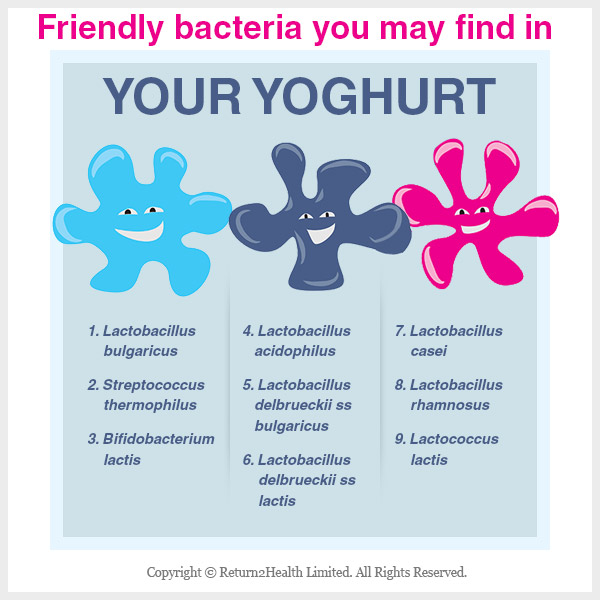
 You’ll also be surprised to know that Streptococcus thermophilus and the genus Bifidobacteria can actually synthesise certain water soluble vitamins like folic acid inside your gut.





This form is protected by reCAPTCHA - the Google Privacy Policy and Terms of Service apply.