Did you know that a child’s immune system is not fully developed until age 14? That’s why they sometimes seem to fall prey to every germ they come into contact with!
The good news is that there are a number of things you can do to protect and support their immune system during children’s growth stages.
We think teaching children the rudiments of good health care is equally important as their school education. So much depends on the establishment of good dietary, hygiene and self-care habits that will stay with them not only during this important stage of their lives, but throughout adulthood.
So we’d like to share a few tips and hints. firstly..
Dietary Tips for Kids
Keep sugar and children away from each other. It has been reported that just 6 teaspoons of sugar can suppress the immune system by 25%. 1 can of soft drink has more than 9 teaspoons!
There are some effective ways of boosting the establishment of a healthy immune system too. Vitamin C is a powerful antioxidant which supports the immune system and is also great for prevention. Powdered Vitamin C works well for children in water or fresh fruit juice. Zinc is also important for immune health and is easily found in a mild tasting liquid form to add to cold drinks. Homeopathic (e.g. echinacea and thuja) and herbal remedies (e.g. olive leaf, pau d’arco and echinacea) can work rapidly to re-balance the body, and also act as preventatives. These can be sourced at chemists or health food outlets.
Some important tips:
Do your children get sufficient sleep? The hours of sleep before midnight are the most important.
Are they aware of the dangers of sharing eating and drinking utensils at school or day care?
Teaching them to cough or sneeze into their elbow rather than hands will help prevent the transmission of germs.
Ensure they are aware of the benefits of fresh air and moderate exercise, balancing indoor activities (yes, computer games are a trap) with plenty play-time outside too.
Help Kids Look After Themselves
Teaching your kids the basics of self-care will form an essential part of their life skills. As adults we know intuitively the effects of excessive stress on the immune system but sometimes we forget to pass this on to our children. Teaching them to be aware of the causes, symptoms and effects of stress helps them to avoid illness as they develop now and also later in life.
Despite our best efforts however, our children will succumb to the occasional transmittable disease, albeit only a cough or cold. Keeping them home will teach them the value of rest and recuperating quickly as well as protecting their fragile immune system from further exposure.






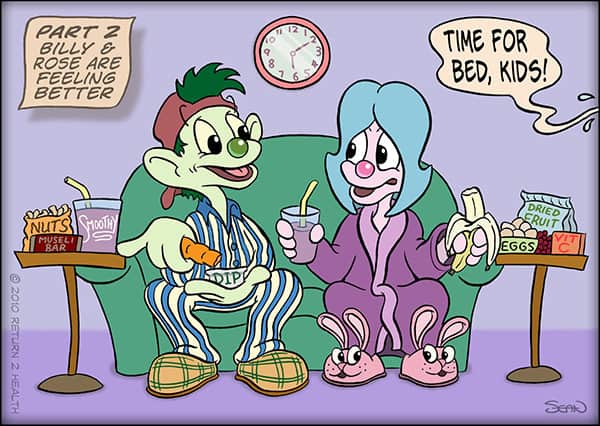 [Click on the image to Enlarge]
 Teaching your kids the basics of self-care will form an essential part of their life skills. As adults we know intuitively the effects of excessive stress on the immune system but sometimes we forget to pass this on to our children. Teaching them to be aware of the causes, symptoms and effects of stress helps them to avoid illness as they develop now and also later in life.
Despite our best efforts however, our children will succumb to the occasional transmittable disease, albeit only a cough or cold. Keeping them home will teach them the value of rest and recuperating quickly as well as protecting their fragile immune system from further exposure.
Teaching your kids the basics of self-care will form an essential part of their life skills. As adults we know intuitively the effects of excessive stress on the immune system but sometimes we forget to pass this on to our children. Teaching them to be aware of the causes, symptoms and effects of stress helps them to avoid illness as they develop now and also later in life.
Despite our best efforts however, our children will succumb to the occasional transmittable disease, albeit only a cough or cold. Keeping them home will teach them the value of rest and recuperating quickly as well as protecting their fragile immune system from further exposure.
 [Click on the image to Enlarge]
 (Part 1) Survive ( and recover from) Winter


This form is protected by reCAPTCHA - the Google Privacy Policy and Terms of Service apply.